
I would like to start this article by saying I am not an expert on race/racism or allyship. I am one white person who has done my best to seek education (formal and informal) in order to live an anti-racist life. I am sharing these thoughts because I am a white person who has taken part in protests in the past as an ally. As a queer person, I have also taken part in events where I’ve seen people with cishetero privilege take up inappropriate space. Therefore, I try to be extra conscious about the amount of space I’m taking up when I’m participating in a protest as an ally.
And I’m really hoping that all white people who want to protest alongside and in support of Black and Brown members of our community will be conscious of the space they take up while there.
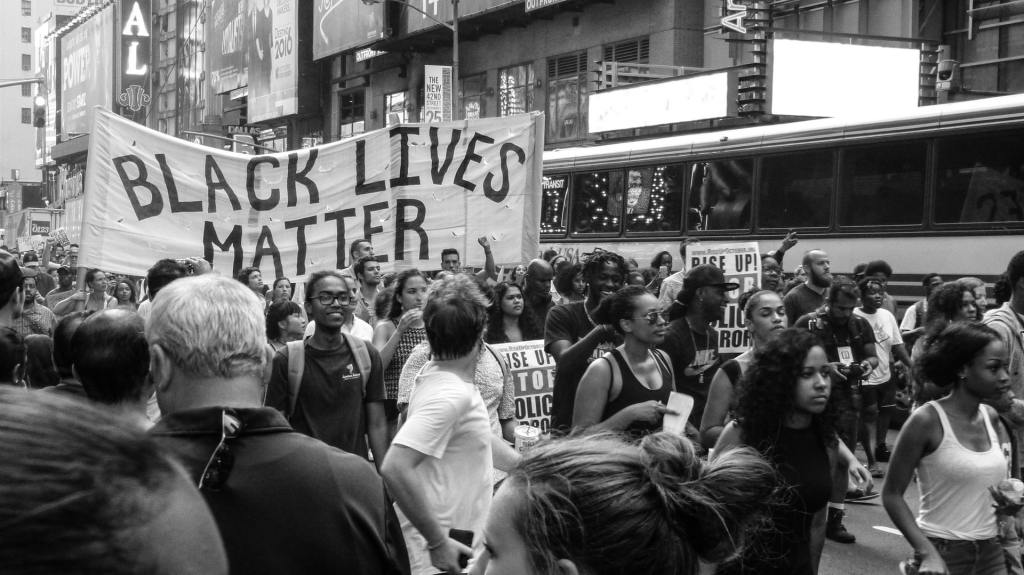
1. Understand the Whole Issue You’re Protesting
If you think the publicized events you’ve been seeing on social media are ground in our current context, you need to do more reading. There is a complex, rich history of institutional racism being upheld by the police state. And it started in slavery, which is also much more complex than you learned about in school.
There are so many print and video resources out there for you to educate yourself. Please listen to the voices of people with lived experience.
2. Check Your Motivations Before Attending a Rally/Protest
Why are you really there? Do you actually understand and support the causes put forward by the organizers? Or do you just want “credit” from your social media followers for being “woke?”
Have an honest conversation with yourself. If your motives are the latter, stay home
3. Consider What Interactions With the Police May Look Like or Call For
More white people may increase police presence. Understand that a police presence does not mean safety for the people who organized this event. That’s the point.
If you are white, and you are not willing to put yourself at risk of bodily harm to provide a buffer between the police and the attendees of color, stay home.
4. Talk Less. Or Not at All.
You may have feelings about the things you see and hear. That’s called white fragility. Get to know what that is, how to recognize it happening to you, and how to resist the urge to defend yourself.
Because this moment is not about you.
I’m going to say that again. This moment in activism. This fight you’re trying to fight. IS NOT ABOUT YOU.
Not all white people are bigots. Not all white people… fill in the sentence however you want. We get it. Talk to your therapist about your guilt.
All Black members of our community experience racism. That’s supposedly why you are at this protest, right? So, fight the urge to get defensive and listen.
 An Experiment with Vulnerability